
Your changes are saved. Thank you for backing the work.

Support the work Est. 2025
Back the work worth building.
Ten open-hardware projects are on our bench, each one for people the market tends to skip. Here is where each one stands today, a look at the drawings, and the ways to back the work.
Four ways in
Buy something. Sponsor us. Back the work. Bring your own.
Every way here supports Squatch Stack’s open work as a whole. The projects further down are what that work is building.
-
Shop the store
Mugs, prints and goods from the Founder’s woods. Every order keeps the bench running.
Visit the store -
Sponsor on GitHub
Monthly or once, on GitHub Sponsors. It funds our open audio tools and the research behind them.
GitHub Sponsors -
Back the work, by card
Any amount from $5, once. At checkout, pick the project you care about most: it tells us what you want to see next. It is not a separate fund.
Back the workCard checkout opens shortly.
-
Bring us a project
We take on custom work. Bring us a problem, whether it’s a board, a device, a tool, a fixture or a part, and we’ll scope it with you.
[email protected]
Monthly, by card
Open String $5 a month
One update by email each calendar month: what shipped, what was measured and what failed, including honest “none this month” entries. Your chosen name in each public release’s thanks while you support us, or in the next update if no release ships. You can stay anonymous.
JoinIn Tune $10 a month
Everything above. Once a public roadmap issue opens, mark one issue each quarter; each supporter counts once when the next quarter is planned, and a vote does not guarantee a feature. When a new tool or demo is ready, the update shows it before it is announced; some months have no preview.
JoinStrobe $25 a month
Everything above, plus your chosen name and one link in the Squatch Stack sponsors list within 30 days of sending them. Anonymous is fine.
JoinOvertone $100 a month
For studios and small companies. Everything above, plus a logo up to 120 px wide in the sponsors list within 30 days, and a written answer or a concrete next step within seven days to the first two issues you open in our public repos each week. That’s an answer, not a promise of a fix.
JoinStanding Wave $250 a month
For companies building on the work. Everything above, with a logo up to 240 px wide in a Standing Wave group above the other tiers, in join-date order. No product consultation is included.
Join
Once, by card
Fresh Strings $15 once
A one-off thank-you: your chosen name in an update within 45 days, and in the next public release notes if one ships within 12 months. You can stay anonymous.
Give onceParts Bin $75 once
Within 30 days your support goes toward a prototype part or test board. The next monthly update names the item, its actual receipt cost and your share of it, and your chosen name appears in an update within 45 days.
Give once
Card checkout for these opens shortly. GitHub Sponsors is open today; its tier wording is being brought in line with this list.
Squatch.CC LLC is a for-profit business. Support is not tax-deductible.
Already a monthly supporter? Manage your monthly support: switch tier, update your card, see receipts, or cancel.
On the bench
Ten projects, in the open.
None of these is for sale yet. Each one is researched, designed and checked in simulation before a board is drawn, then built and tested with the people it is for before anyone is asked to buy one. Here is where each one stands, with a look at the drawings where we can show them.
- Design
- Simulated
- Placed
- Routed
- First boards
- Bench
- Pilot
Design: Midifoot, Leadmeter, Flashalert and the wildlife recorders. Simulated: SwitchKey, Leakguard, Coldchain, Railguard and Heatflag. Placed: Fieldlogger. No project has reached routing, first boards, bench or pilot yet.
- Done
- In progress
- Next
-
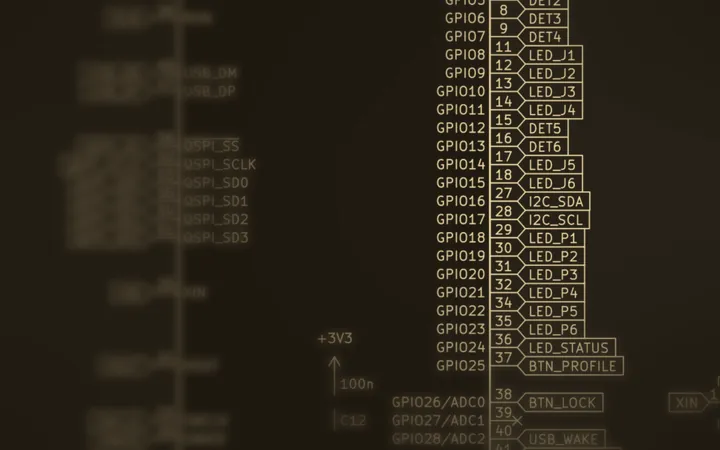
SwitchKey schematic, a detail For people who use accessibility switches, and the OTs and families who set them up
SwitchKey
Lets one big button, a head switch or a sip-and-puff switch drive a tablet, phone or computer, and retunes from the box itself.
- A family with only an iPad changes a switch’s timing with the box’s own button, with no laptop in the house.
- An occupational therapist sets up profiles in a web page and lends the box out from a loan closet.
- When a software update changes how a device handles switches, the published compatibility list says which setting works.
Back the workWhere we are
- Done: Research: who uses switches, and what is out there
- Done: Parts chosen, each checked against its datasheet
- Done: Circuit drawn
- Done: Checked in simulation
- Done: Board layout planned, from a study of proven boards
- Next: Placing the parts on the board
- Next: First boards, then a hands-on trial with switch users
-
For homeowners, landlords and property managers, and rural well and tank owners
Leakguard
A loud, wired alarm for leaks, freezing pipes and high sump water that works with no app, no cloud and no radio.
- A water heater starts leaking in the basement; the alarm sounds right there, Wi-Fi or not.
- A landlord with empty units connects it to the alarm panel already on the wall.
- A well-house pipe heads toward freezing, and the temperature probe raises the alarm first.
Back the workWhere we are
- Done: Research
- Done: Parts chosen and checked
- Done: Circuit drawn
- Done: Checked in simulation
- Done: Alarm rules written and tested in firmware
- Done: Board layout planned
- Next: Placing the parts on the board
- Next: First boards, then a field pilot in real basements and pits
-
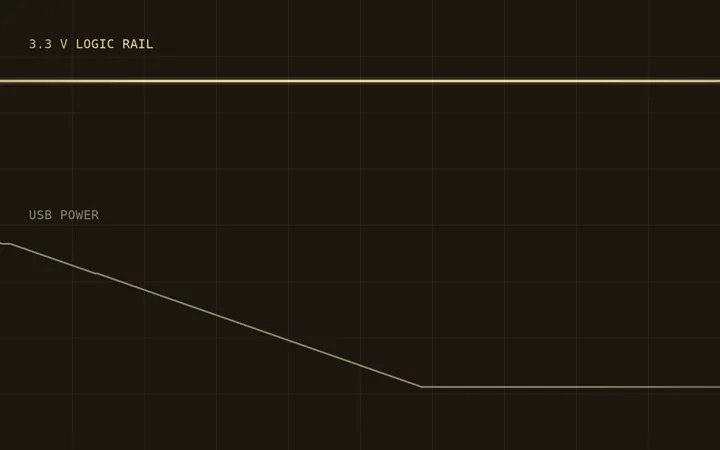
Coldchain simulated: the USB cord pulled, the logic keeps running For food banks and pantries, community seed banks, and anyone with a freezer they can’t afford to lose
Coldchain
Sounds when a freezer or fridge drifts warm, and remembers the warmest temperature it reached. Not for vaccines or medicine.
- A pantry freezer fails overnight on a Friday; the alarm sounds, and the record shows how warm it got for the food-safety call.
- A seed library’s fridge runs warm through a summer week, and the log shows it before the seed is written off.
- A family’s chest freezer of game meat stops quietly, and the alarm catches it instead of a lost season.
Back the workWhere we are
- Done: Research
- Done: Parts chosen and checked
- Done: Circuit drawn
- Done: Checked in simulation
- In progress: Fixing a power-recovery case the last review found
- Next: Placing the parts on the board
- Next: First boards, then a trial with food-bank and seed-library partners
-
For gigging players, home-studio producers, performers who play with their feet, and school music rooms
Midifoot
A tough USB-MIDI foot controller you can open and repair, with switches you replace yourself.
- A switch dies mid-tour, and the player swaps it with ordinary tools instead of sending the whole unit away.
- A producer runs record, loop and markers from the floor, with no driver to install.
- A school keeps spare switches in a drawer, so a stomped unit is back the same day.
Back the workWhere we are
- Done: Research
- Done: Parts chosen and checked
- Done: MIDI output stage checked in simulation
- In progress: Drawing the rest of the circuit, USB side first
- Next: Simulating the whole board
- Next: Placement, then first boards for players to stomp on
-
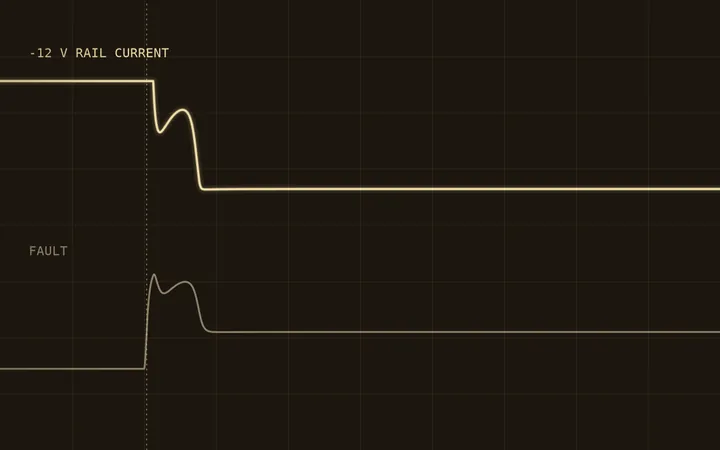
Railguard simulated: a fault, and the rail cut about 2 µs later For eurorack players who swap modules often, performers who re-patch on stage, and small module makers
Railguard
Watches each power rail of a modular case and is designed to cut the power before a fault reaches your modules.
- A ribbon cable goes on wrong in bad light, and the breaker is designed to trip on the fault.
- A packed live case is near its supply’s limit, and the screen shows each rail’s load before soundcheck.
Back the workWhere we are
- Done: Research
- Done: Parts chosen and checked
- Done: Circuit drawn
- Done: Every fail-safe case we could name, checked in simulation
- Done: Board layout planned
- In progress: Input protection and trip thresholds
- Next: An independent review, then placement
- Next: First boards, then fault tests on a real bus, where we try to break it on purpose
-
For athletic trainers and coaches, school athletics directors, and safety leads for farm and construction crews
Heatflag
A heat-stress flag you can read across a field, based on wet-bulb globe temperature. With no wind sensor in this first version, it tends to read high in sun with wind and can read low in dead-calm sun.
- A trainer with a hundred players at August practice reads the flag from the sideline between half-hourly checks.
- A crew lead working in direct sun sees the colour change, the cue for the crew’s own heat plan.
Back the workWhere we are
- Done: Research
- Done: Parts chosen and checked
- Done: Circuit drawn
- Done: Checked in simulation, reviewed three times
- In progress: Two small fixes before layout
- Next: Placing the parts on the board
- Next: Prototypes, tested side by side with a reference heat-stress instrument
-
For renters and caregivers, and the people who help households sample their water
Leadmeter
A low-cost screen that flags tap water likely to hold lead and says when to get a lab test. A screen, not a lab test.
- A renter in an older building screens two taps, and sends a lab sample if either is flagged.
- A community sampling helper screens many homes and sends the flagged taps for lab confirmation.
Back the workWhere we are
- Done: Research
- Done: Electronics designed for a first screen
- In progress: Choosing and checking the parts
- Next: A lab study of whether the test cell can read lower lead levels
- Next: Validation against a certified lab before it is offered to anyone
-
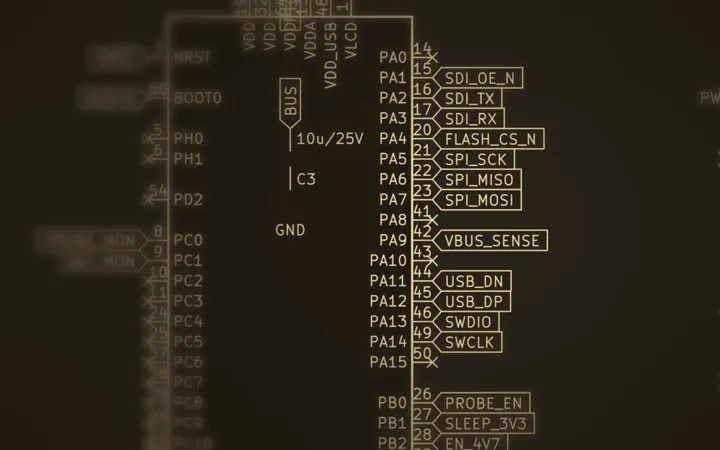
Fieldlogger a corner of its schematic For watershed volunteers and school science classes
Fieldlogger
Records depth, conductivity and temperature from one stream probe on batteries, built to run a whole season with no subscription.
- A volunteer group leaves a logger in a creek for the season and collects the record on visits, with no cloud account.
- A class compares this spring’s stream record with last year’s, with no student logins.
Back the workWhere we are
- Done: Research
- Done: Parts chosen and checked
- Done: Circuit drawn
- Done: Checked in simulation: surges, shorted cables, wrong wiring
- Done: Parts placed on the board, inside its sealed case
- In progress: Three small placement fixes
- Next: Routing the board
- Next: First loggers, then a season in a real stream
-
For deaf and hard-of-hearing people: older adults living alone, deaf parents, and renters who can’t change the doorbell
Flashalert
Turns a doorbell, or the sound of your own smoke and CO alarms in the same room, into flashing light and a bed shaker. An extra signal beside your alarms, never a replacement for them.
- A renter who can’t replace the building’s chime sees the lights flash when it rings.
- Someone watching TV with their hearing aids out sees the flash when there’s a knock at the door.
- At night it is designed to turn the alarm in that room into a bed shaker; the certified alarms stay, and get tested each month.
Back the workWhere we are
- Done: Research
- Done: Parts chosen and checked
- Done: Circuit drawn
- Done: Alarm detector tested on computer-made alarm sounds
- In progress: Closing the latest review’s findings
- Next: Placement and prototype hubs
- Next: Tests with real alarms in real homes, with deaf and hard-of-hearing testers
-
For field technicians, university ecology labs, school science coordinators and volunteer survey groups
Wildlife recorders
Open bat and bird recorders you can service yourself, built to stay out for nights at a time on AA cells.
- A volunteer bat survey sets recorders at the same spots each season and follows a known protocol.
- A lab keeps its own spare pods and swaps a failed one between visits.
Back the workWhere we are
- Done: Research
- Done: Power budget: how many nights a set of AA cells lasts
- In progress: Planning a pilot with people who already survey bats and birds
- Next: Parts, circuit and simulation
- Next: Prototypes out in the field
Beyond the ten
The rest of the workshop.
-
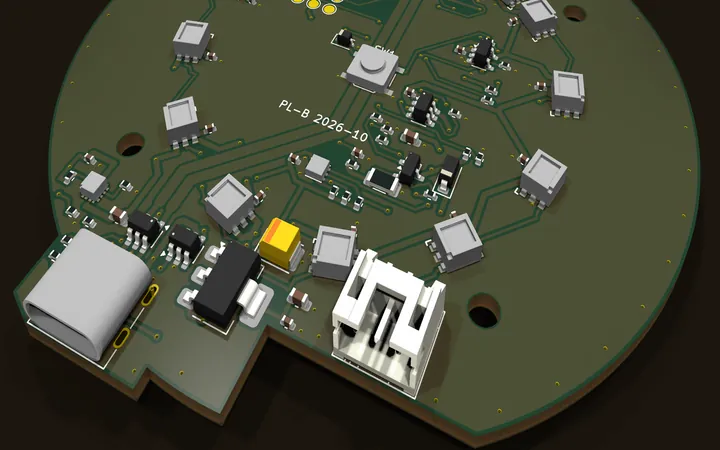
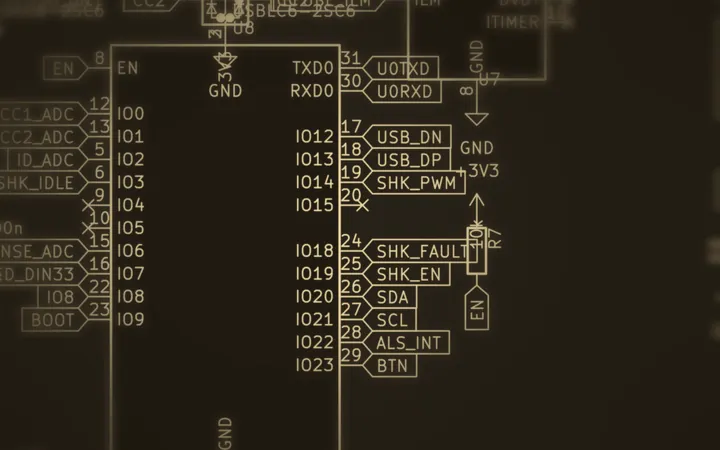
Prompt light the routed board, and a corner of its schematic Hearth
The prompt light
A round ring of light for Hearth, our open smart-home starter pack for older adults: it shows a gentle prompt, has a button to answer it, and can drive a bed shaker.
Where we are
- Done: Circuit drawn and checked in simulation
- Done: Board routed and checked
- Done: Order files ready
- Next: First boards: none built yet
-
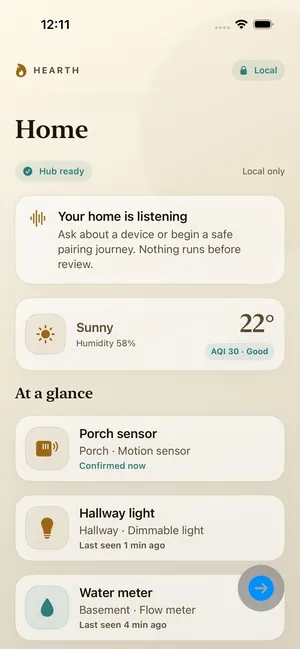
Homes of older adults
Hearth, in the open
The hub software behind it: a home's sensors, its alerts and the people the person chooses, all on a small computer in the home. No cloud service, no account with us. It is not a medical device or an emergency service.
Where we are
- Done: Ran on a working home hub
- Done: Open-source licence chosen: Apache 2.0
- In progress: Preparing the public release
- Next: The code, public
-
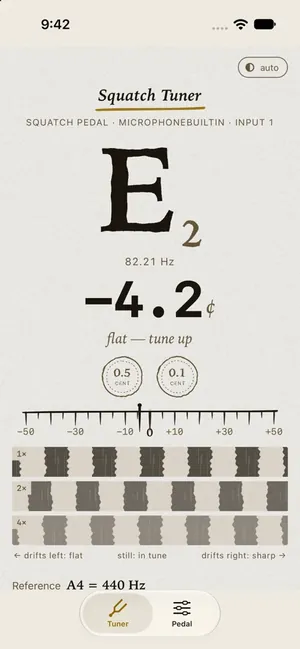
Guitarists
Squatch Tuner
A strobe tuner that locks in 44 ms, on the web and in the pedal's phone app.
Where we are
- Done: Live: tuner.squatch.cc
- Done: Inside the pedal’s phone app
-
Guitarists
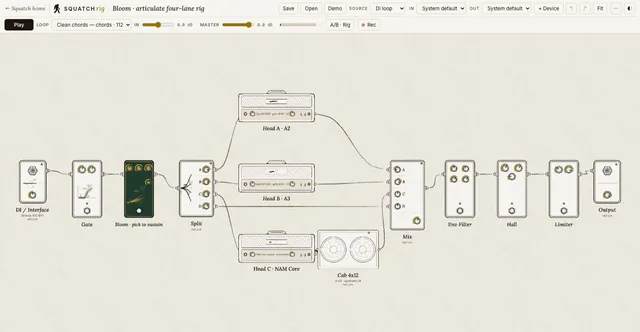
Squatch Rig and Rig Live
Neural amp models, effects and a cabinet you can play in a web page; and Rig Live, a stage host that plays a whole setlist with gapless song changes, run from your phone.
Where we are
- Done: Playable in your browser: rig.squatch.cc
- Done: Rig Live plays a setlist with gapless song changes
- Done: Rig Live pairs with a phone on stage
- Done: Rig Live’s stage wears our pedal art
- Next: A phone app to run Rig Live
3D design and making
From the screen to the shop floor, and robots next.
We design in 3D: enclosures, boards placed in their cases, and parts drawn ready for our own CNC mill, with the cuts simulated before any wood is touched. Next comes 3D printing and real cutting, and after that, robotics. If you build robots, need one built, or would back the tools to get us there, we would like to hear from you.
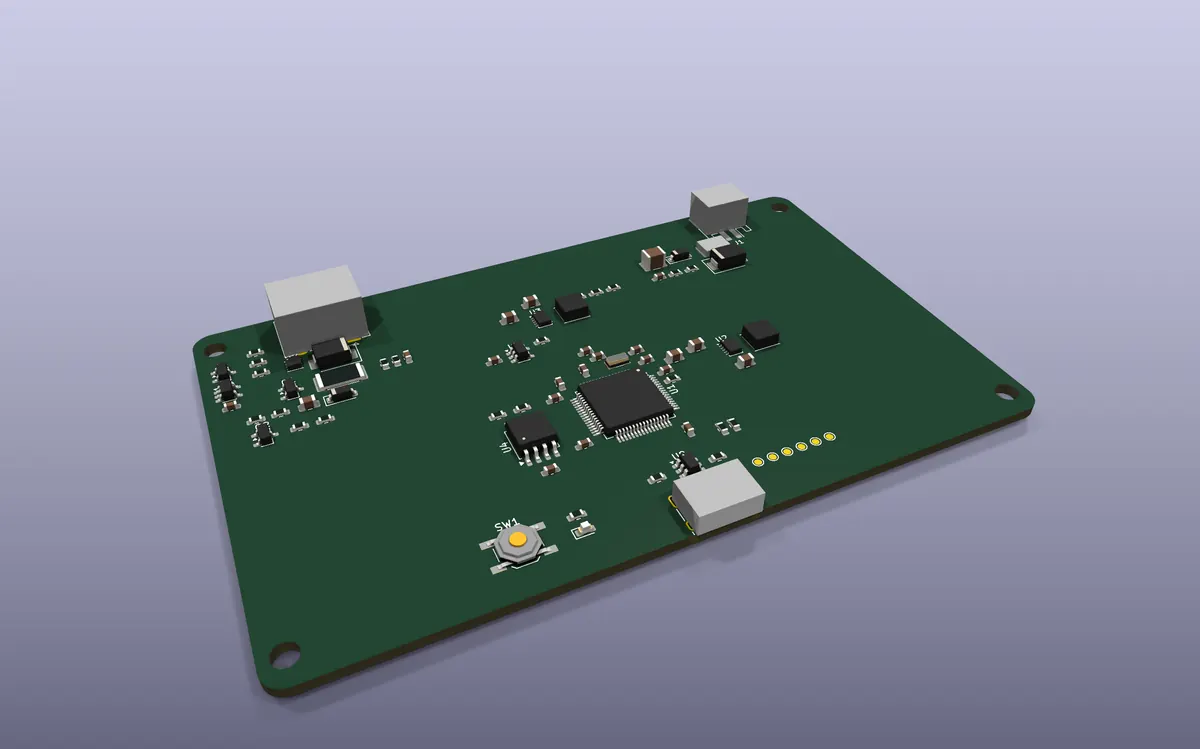
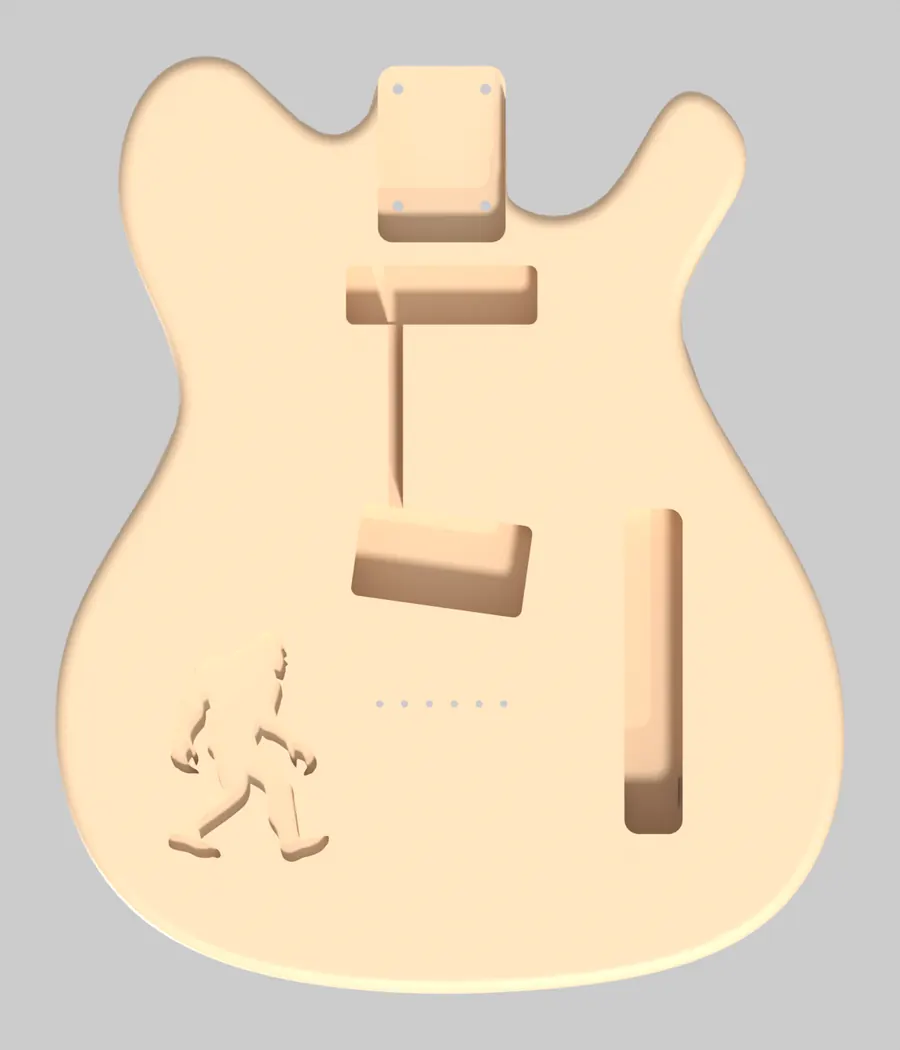
We also capture real places as 3D scans. Talk to us about 3D or robotics
Where the money goes
Parts, first boards, and the testing that comes after.
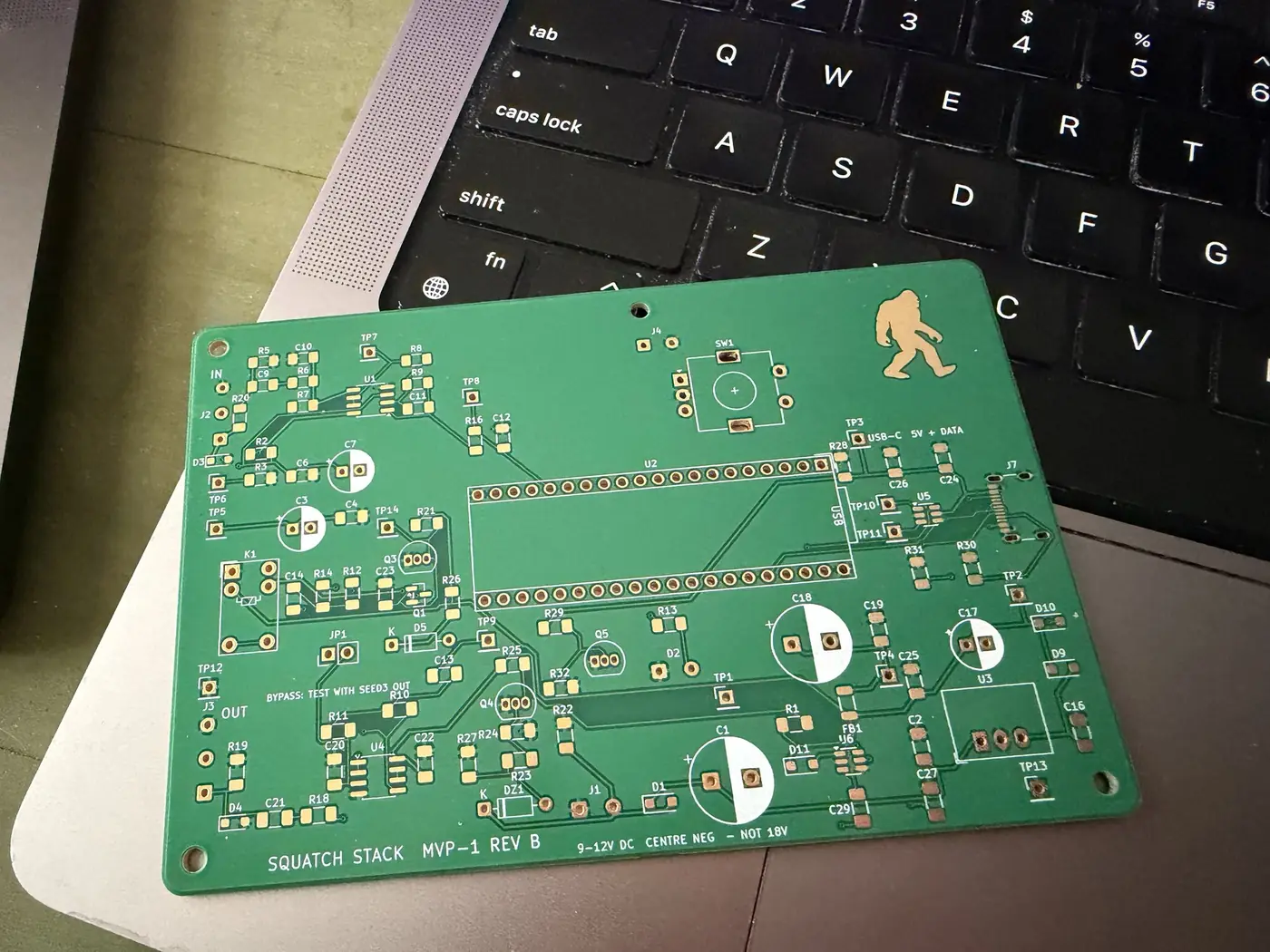
This is our MVP-1 pedal board, rev B. Support pays for the next ones like it: parts and prototype boards first, then trials with the people each project is for, and the lab and compliance testing every product needs before it can be sold.
What we’re looking for
Come build it with us.
-
Pilot partners
Try a first board where it will really be used, and tell us what is wrong with it.
- Food banks and seed stores
- Schools, coaches and outdoor crews
- Stream volunteers
- Deaf and hard-of-hearing testers
- Switch users and occupational therapists
- Bird and bat researchers
- Synth builders
- Players who stomp on gear
-
A university or lab partner
For the lead-in-water study: a lab with electroanalysis experience to run the bench work, or to check it.
Write to us -
Sponsors
People and companies who want this work to exist. Support starts at $5.
Ways to help -
Early testers
If you would try an early board and tell us honestly what breaks, write and tell us which project.
Write to us
Rather talk first? Write to [email protected].